In this touching novel by the acclaimed author of Telephone of the Tree, an intriguing new boy at school helps Daisy cope with both bullying and past trauma.
Daisy has been working on invisibilizing herself—ever since living with her mother’s violent ex-boyfriend, and now to avoid the school bullies who are targeting her. She keeps a low profile, eating lunch with the librarian instead of in the Lunchroom of Terror and secretly counting whenever she’s anxious.
But things are looking up. A new boy has befriended her and seems able to stand up to the bullies, and the stray cat she’s been feeding is starting to almost trust her. Maybe she can finally focus on futurizing rather than invisibilizing.
ALISON McGHEE has been awarded the Minnesota Book Award and the Great Lakes College Association New Writers Award for her first novel, Rainlight. This is her second novel. Her short fiction has been published widely in literary magazines. Born and reared in the Adirondack Mountains of upstate New York, she currently lives in Minnesota.
From the author of the “phenomenal achievement” (Kirkus) Take Me Home, a children’s librarian must temporarily move her public library into a shed in the county botanic gardens, where her archnemesis is the assistant director.
Single mom Tansy Perkins only has room in her life for her daughter and her library. And maybe the next book to add to her collection. But after a catastrophic hurricane severely damages her library, she’s forced to temporarily move her branch into the adjacent county botanic gardens, where Jack Reid—the world’s grouchiest gardener who rescued her and her daughter from the flood—happens to be the assistant director.
Jack has always preferred plants over people, having built a strong track record of avoiding relationships ever since his divorce six years ago. So, Tansy and her quirky band of bookish colleagues’ encroachment into his carefully-kept territory is a little more than irksome, especially when it means sharing his already-scarce resources.
When Jack and Tansy are tasked with working together on the spring festival, they have no choice but to call a truce. And soon their newfound professional partnership gives way to a deep intimacy that they’ve both been silently craving. But Tansy has lost too much to risk her heart, and Jack has sworn off real love. When an opportunity arises for funding that both the library and gardens need, will their loyalties lie with the futures they’d always planned for, or the new spark they’ve found with each other?
Melanie Sweeney is the USA Today bestselling author of Take Me Home. She writes contemporary romance in which ordinary people find extraordinary love, and she lives near Houston, Texas, with her husband, three kids, and too many cats. When she’s not writing, she’s figure skating, embroidering, or playing her ukulele.
Leah Lockhart is more than her astrology. She’ll search the world to prove it.
Leah Lockhart is proudly science-minded and woo-woo averse. But the life she’s carefully curated is knocked suddenly off course, first by a destabilizing case of vertigo, and then by an astrology reading that claims she’s living way out of line with what was written in her stars.
Incensed, Leah sets off on a mission to prove that astrology is bogus by comparing her life to that of her Star Twins around the world—people born under her exact same map of the stars. But her even deeper guides on a whirlwind journey through Venice, Istanbul, New Orleans, and beyond turn out to be three people already in her orbit: the mother she thinks abandoned her, the father she thinks saved her, and the former boy next door whose love could be the path to her truest self.
Jessie Rosen is a writer who got her start with the award-winning blog 20-Nothings. She has sold original television projects to ABC, CBS, Warner Bros., and Netflix, and her live storytelling show Sunday Night Sex Talks was featured on The Bachelorette. She is the author of The Heirloom, and lives in Los Angeles.
From this essential guide, managers will learn concrete steps for creating and maintaining a supportive, productive work environment that supports well-being among library staff.
Fostering well-being in today’s library workplaces is no longer a luxury but a necessity, particularly for managers tasked with guiding and supporting their teams. Amidst budget cuts, attempts to ban or restrict books, attacks on library staff online and in-person, and potentially hostile and aggressive patrons, taking care of ourselves and our staff by putting good policies and practices into place is more important than ever. In this book, Newman and her expert contributors will lead you through creating an environment that nurtures the health, satisfaction, and well-being of its workers and helps prevent or reduce the internal factors that create an unhealthy workplace. You will receive actionable advice on
navigating the pitfalls of vocational awe, which can lead to unrealistic expectations and self-neglect;
setting and recalibrating healthy boundaries;
approaching difficult conversations by creating spaces for positive staff communication;
overcoming limited budgets;
the proper mindset for encouraging realistic performance expectations among employees;
using recognition, appreciation, and staff professional development as tools for wellness;
nurturing social connections and collaboration to combat loneliness;
effective techniques for addressing sensitive issues such as disabilities, confronting anti-fat bias, and moral injury;
emotional and invisible labor mitigation; and
self-care methods for library leaders at risk of burnout.
Bobbi L. Newman (she/her) is a librarian, Certified Wellness Practitioner, and workplace well-being expert dedicated to helping libraries create environments where individuals feel empowered, supported, and free to bring their best selves to work. Bobbi specializes in evidence-based strategies to cultivate psychologically safe workplaces that foster trust, collaboration, and open communication. As a consultant, speaker, instructor, coach, and well-being advocate, her comprehensive approach includes workshops, keynote presentations, strategic consulting, and coaching to help organizations establish sustainable practices that reduce burnout, increase engagement, and ensure team members feel genuinely valued. She also writes about workplace well-being on her blog, Librarian by Day, and is a sought-after speaker at state, national, and international conferences.
Tattoos are not merely decorative; they contain deep meaning for individuals and communities. They document their wearers’ personal histories and position in families or society, and they engage with a communal understanding of symbols.
This unique book makes the case that archivists who want to preserve as full a human story as possible must recognize the rich documentation provided by tattoos. It also argues, in a broader sense, that traditional archives are not representative of the ways human beings transmit information through time and that they must be augmented by other types of storytelling to provide a more complete record of our species.
Authors Baxter and Coyner touch on timely topics such as historical narratives, storytelling, cultural traditions, the body as a text, social control, and memorialization by considering tattoos as a personal and community archive. Discussing tattoos as a storytelling tool, the authors also challenge how history is kept and who gets included. Stories on Skin is committed to the rights of communities to tell their stories in their own way and to the power that right brings.
Terry Baxter (he/him) has been an archivist for almost 40 years, the last 25 with the Multnomah County (OR) Archives, USA. He helped establish the County Archives in 2001 and continues seeking ways to use it to assist information seekers of all sorts. Baxter is a member of and has served in a variety of leadership positions in Northwest Archivists; Society of American Archivists; Association of Tribal Archives, Libraries and Museums; Archives Leadership Institute; and The Academy of Certified Archivists.
Libby Coyner-Tsosie (she/they) is the University Archivist at UMass Amherst in the W.E.B. Du Bois Library, USA, where she primarily cares for collections related to the history of the university. She was trained in archival studies and library science at the University of British Columbia and is a member of the 2016 cohort of the Archives Leadership Institute. She is a cancer survivor whose life has been reshaped by disability. Libby lives with her partner Shepherd and their five cats.
Jason Tyrrell is the executive vice president of content at OverDrive, the leading digital media distributor for libraries, schools, and corporations. He oversees the growth and development of its platforms: Kanopy, Libby, and Sora. With over 15 years of experience in film and TV marketing and distribution, he plays a key role in expanding OverDrive’s presence while championing accessibility for partners and communities globally.
The campaign of destruction that Axel Soledad and Dallas Cates wreaked on Nate Romanowski and Joe Pickett left both men in tatters, especially Nate, who lost almost everything. Wondering if the civilized life left him vulnerable to attack, Nate dropped off the grid with his falcons in tow to prepare for vengeance.
When Joe gets a call from the governor asking for help finding his son-in-law, who has gone missing in the Sierra Madre mountain range, he enlists the help of a local, a rookie game warden named Susan Kany.
As Nate and fellow falconer Geronimo Jones circle closer to their prey, Joe and Susan follow the nearly cold trail to Warm Springs. Little do Nate and Joe know that their separate journeys are about to converge . . . at Battle Mountain.
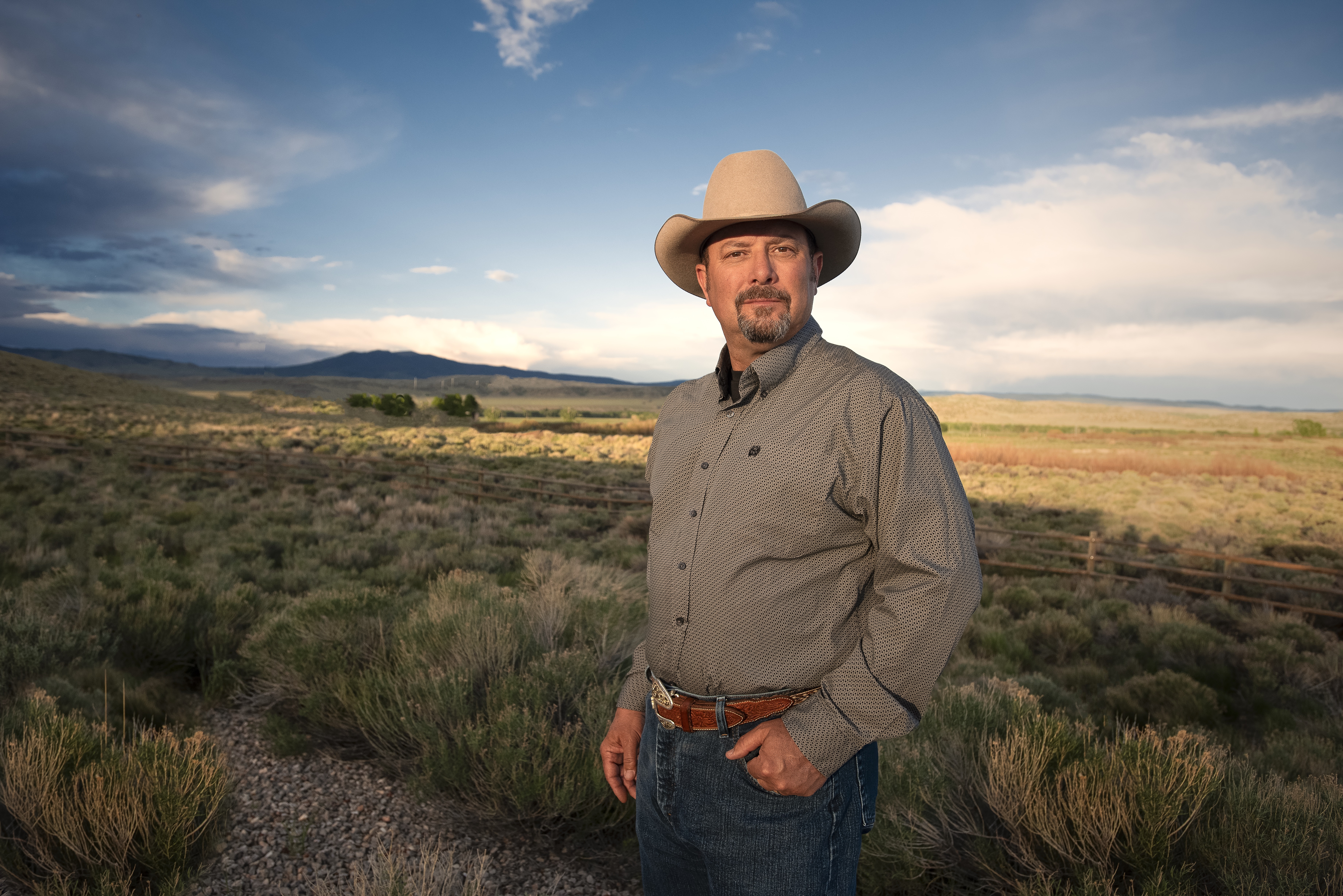
C. J. Box is the author of twenty-five Joe Pickett novels, eight stand-alone novels, and a story collection. He has won the Edgar, Anthony, Macavity, Gumshoe, and two Barry awards, as well as the French Prix Calibre .38, the Western Heritage Award for Literature, and two Spur Awards. An avid outdoorsman, Box has hunted, fished, hiked, ridden, and skied throughout Wyoming and the Mountain West. He has been executive producer on television series based on his books, including ABC TV’s Big Sky and Joe Pickett on Paramount+.
Lindsay Cronk currently serves as a member of Core: Leadership, Infrastructure, Futures. She’s a member of the Core Five-Year Fundraising Team and served as 2021–2022 president of Core. She led the Core Communications Working Group and has also served on ALA Council, coauthoring ALA’s Resolution to Condemn White Supremacy and Fascism as Antithetical to Library Work. Before that, she served on the board of the Library Information Technology Association and edited its popular LITA Blog. She is the first woman to serve as dean of libraries at Tulane University.
Cronk is 2024–2025 vice chair of the Association of Research Libraries’ (ARL) Advocacy and Public Policy Committee. She also serves on the Association of Southeastern Research Libraries board, Clarivate North American advisory group, and editorial board of The Serials Librarian journal. She is cocreator and founder of PeMento: Peer Mentoring for Mid-Career Library Workers. Her past keynotes have covered a variety of topics, from leadership to team building to systems migrations, while her research has focused on scholarly communication.
Cronk holds an MLIS from Valdosta (Ga.) State University, an education specialist degree from Georgia Southern University in Savannah, and a bachelor’s from Agnes Scott College in Decatur, Georgia.
“I’m honored and thrilled to be nominated for ALA president—thank you for this opportunity. Libraries are a collective superpower for learning, research, and discovery. We empower individuals and strengthen communities. The American Library Association champions and advances this vital work, offering all library professionals a shared home, a united voice, a thriving community of practice, and a values-driven foundation of policy. We have deep strengths and spectacular talent, and I am the loud librarian ready to amplify and advocate it,” Cronk said. “With a proven record of building teams and coalitions—within ALA and beyond—I am prepared to guide the Association through this pivotal moment of challenges and opportunities. Libraries are indispensable—not only providing resources but also fostering curiosity and inspiring a love of knowledge. When libraries lead, communities succeed.”
Maria McCauley, who was an ALA Spectrum Scholar, is a current member of Core: Leadership, Infrastructure, Futures; the Public Library Association (PLA); and the Association of College and Research Libraries (ACRL). She is also a member of the Rainbow Round Table, Sustainability Round Table, Intellectual Freedom Round Table, and the International Relations Round Table. She is also a member of the Asian/Pacific American Librarians Association, Chinese American Librarians Association, BCALA, Reforma: The National Association to Promote Library and Information Services to Latinos and the Spanish-Speaking, the American Indian Library Association; the Freedom to Read Foundation; the Massachusetts Library Association; and New England Library Association.
McCauley has held several leadership positions, including at-large councilor of ALA Council, ALA Executive Board member, and member of ALA’s Fiscal and Audit Committee. She was the 2022–2023 PLA president and a PLA board member.
McCauley holds a PhD in managerial leadership in the information professions from Simmons University in Boston; an MLIS from University of Pittsburgh; a bachelor’s in theater from Ohio Wesleyan University in Delaware, Ohio; and a leadership certificate from Northeastern University in Boston. She also completed ARL’s Library Leadership for New Managers Program.
“It is an honor to stand for the 2026–2027 ALA presidential election. ALA is a vital organization that is a lifeline for so many in the areas of professional development, advocacy, and connection. This includes me, from being a Spectrum Scholar, working in academic libraries, and serving for the past 13 years as a public library director, former ALA Executive Board member, and Public Library Association president,” McCauley said. “I am excited to bring my executive leadership and governance experience, knowledge, and passion for libraries to the presidential role. With my inclusive leadership practices and facilitation skills, I will work across the Association to strengthen ALA, inspire, guide, and connect members, and advocate for intellectual freedom, equity and inclusion, sustainability, and the public good of libraries.”
Hana Babic is a quiet, middle-aged librarian in Minnesota who wants nothing more than to be left alone. But when a detective arrives with the news that her best friend has been murdered, Hana knows that something evil has come for her, a dark remnant of the past she and her friend had shared.
Thirty years before, Hana was someone else: Nura Divjak, a teenager growing up in the mountains of war-torn Bosnia—until Serbian soldiers arrived to slaughter her entire family before her eyes. The events of that day thrust Nura into the war, leading her to join a band of militia fighters, where she became not only a fierce warrior but a legend—the deadly Night Mora. But a shattering final act forced Nura to flee to the United States with a bounty on her head.
Now, someone is hunting Hana, and her friend has paid the price, leaving her eight-year-old grandson in Hana’s care. To protect the child without revealing her secret, Hana must again become the Night Mora—and hope she can find the killer before the past comes for them, too.
Allen Eskens is the USA Today bestselling author of The Life We Bury, which has been published in twenty-six languages, and eight other novels, most recently Saving Emma, Forsaken Country,The Stolen Hours, The Shadows We Hide, and Nothing More Dangerous. His books have won the Barry Award, the Rosebud Award, the Silver Falchion Award, and the Minnesota Book Award. Eskens is a former criminal defense attorney and lives with his wife, Joely, in greater Minnesota.
Learn to facilitate modern book clubs devoted to elevating the reading experience through active engagement, resulting in long-term commitment to book club events.
How do you get the kids in your library to read? The benefits of reading are plentiful, especially for youth – it improves vocabulary, helps them become more empathetic and inclusive, and expands exposure to academic opportunities. In an age of digital distractions, book clubs can be a catalyst for encouraging youth to prioritize reading.
These tried and tested strategies help even reluctant readers develop a love of reading through book club participation. Author Stacy Brown, who has facilitated book clubs for more than twenty years, shows you how to build active engagement through hands-on activities, reflective discussions, and theme-related tips and tricks, even in the face of time and budget constraints. Learn how to attract participants, brand and market your book clubs, and keep attendees returning for more. You’ll be changing the world – one book club at a time.
Stacy Brown is the Director of Innovation and Professional Learning at The Davis Academy in Atlanta, GA, USA, where she previously worked as the 21st-Century Learning Coordinator.





 Circulating Ideas